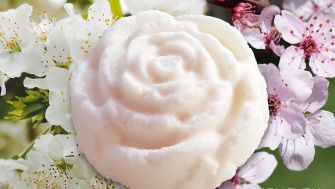
Acido stearico

[23]
4,06  (IVA incluso)
3,41  (without VAT)
_ _
Code Dimensioni Prezzo netto Prezzo totale Quantità
M-1418-0.1 100 g
3,41 
4,06 
M-1418-1 1 kg
10,45 
12,44 
M-1418-5 5 kg
33,58 
39,96 
M-1418-25 25 kg
135,23 
160,92 
Product reference D-1418

Descrizione

Acido Stearico - Agente di texture, stabilizzante e fattore di consistenza

L'Acido Stearico è un acido grasso saturo, naturalmente presente in vari burri e oli vegetali, ed è un ingrediente indispensabile nella formulazione di cosmetici solidi ed emulsioni ricche. Sebbene porti il nome di "acido", in cosmetica non svolge un ruolo esfoliante, ma agisce come addensante e opacizzante. È presente in creme, balsami, unguenti, stick e prodotti in formato stick, saponi e candele.


Ingredienti (INCI): Stearic Acid.


Caratteristiche tecniche

  • Origine: 100% vegetale (derivato da oli vegetali).
  • Aspetto: Granuli o scaglie bianche con odore neutro.
  • Solubilità: Solubile nella fase oleosa riscaldata.
  • Funzione: Co-emulsionante, agente addensante, fattore di consistenza, agente opacizzante.
  • Dosaggio generale raccomandato: 2% - 10% (fino al 30% in candele o prodotti solidi).

Informazioni dalla letteratura specializzata

L'acido stearico è una delle materie prime più utilizzate nell'industria cosmetica grazie al suo profilo di sicurezza e alla sua versatilità:

  • Strutturazione dell'emulsione: La letteratura specializzata lo descrive come un eccellente agente formatore di rete cristallina nelle creme, in grado di prevenire la separazione delle fasi e di fornire una maggiore stabilità a lungo termine.
  • Profilo sensoriale: A differenza di altre cere vegetali, l'acido stearico conferisce alle emulsioni una texture opaca, non lucida, e una sensazione di "tocco asciutto", favorendo un rapido assorbimento nella pelle.
  • Protezione cutanea: In quanto componente naturale della barriera lipidica, aiuta a mantenere l'integrità dello strato corneo e protegge la pelle dalla perdita di umidità.
  • Saponificazione: Nella produzione di saponi, è documentato per la sua capacità di accelerare il "trace" e di fornire una schiuma densa e stabile.

Proprietà principali

  • Fattore di consistenza: Trasforma una lozione fluida in una crema densa e ricca.
  • Opacizzante: Conferisce ai prodotti cosmetici un aspetto bianco, opaco e untuoso.
  • Stabilizzante: Aiuta a mantenere l'omogeneità delle emulsioni Olio in Acqua (O/W).
  • Indurente (agente indurente): Aumenta il punto di fusione dei balsami labbra e dei burri corpo, impedendo che si sciolgano ad alte temperature ambientali.

Applicazioni

  • Creme viso idratanti e lozioni corpo.
  • Creme da barba, creme detergenti.
  • Balsami labbra e stick cosmetici.
  • Burri corpo tipo "Whipped body butter" per una struttura aerata ma stabile.
  • Saponi naturali realizzati con processo a freddo o a caldo.
  • Candele vegetali (aumenta il tempo di combustione e l'opacità).

Guida alla formulazione

  • Procedura: Aggiungere alla fase oleosa della preparazione e riscaldare fino a completa fusione (circa 65-70°C). È stabile in un ampio intervallo di pH.
  • Sinergie Ellemental:
    • Per la barriera cutanea: combinare con Sodium Lactate nella fase acquosa per creare una crema intensamente idratante e protettiva.
    • Per una texture vellutata: associare con MCT Oil per ottenere un rapido assorbimento e un aspetto opaco.

Domande frequenti (FAQ)

È adatto alla pelle grassa / a tendenza acneica?
Sebbene sia un acido grasso, l'acido stearico vegetale ha un basso potenziale comedogenico nelle formulazioni ben bilanciate. La sua sensazione "asciutta" lo rende spesso più gradevole sulla pelle mista rispetto ad altri burri vegetali pesanti.

Posso usare l'acido stearico come unico emulsionante?
No. L'acido stearico è un co-emulsionante. Richiede un emulsionante primario per creare un'emulsione stabile; il suo ruolo è migliorare texture e stabilità.


Sicurezza d'uso

Profilo: Ingrediente sicuro, biodegradabile, di origine vegetale, stabile all'ossidazione.
Precauzioni: Uso cosmetico esterno. Maneggiare con cura quando è caldo (fuso).
Conservazione: In un luogo asciutto e fresco.


Letteratura scientifica di riferimento (2020-2024)

  • Ferreira, M. S., et al. (2022). Acidi grassi nei cosmetici: il ruolo dell'Acido Stearico nella stabilità delle emulsioni e nel supporto della barriera cutanea. Journal of Cosmetic Dermatology.
  • Gosh, S., et al. (2021). Effetto della concentrazione di acido stearico sulle proprietà reologiche delle emulsioni cosmetiche O/W. International Journal of Cosmetic Science.
  • Tan, C., et al. (2023). Acidi grassi di origine vegetale: un approccio sostenibile alla modifica della texture nella cura della persona. Green Chemistry Letters and Reviews.
  • Johnson, W. Jr., et al. (2020). Valutazione della sicurezza dell'Acido Stearico e degli acidi grassi utilizzati nei cosmetici. Cosmetic Ingredient Review (CIR).


Dettagli

Code
D-1418
INCI
Stearic Acid
Stato
Conforme alle norme naturali
Indice naturale
ISO 16128 - Origine naturale 1.0
Additivi
no
conservanti
senza conservanti
Aspetto
avorio, fiocchi, granuli
Adatto per
candele, cosmetici, saponi
Cura della pelle
Balsami, Creme viso, Detergenti
Cura del corpo
Balsami, Burri per il corpo, Creme Emulsioni, Unguenti
Igiene
Deodoranti, Detergenti, Saponi
Carica
anionico
Solubilità
in olio
Livello di utilizzo
2 - 30 %
Conservazione
in un luogo fresco e asciutto, lontano dalla luce solare diretta
Download
TDS  |  MSDS

Related Recipes and Articles

Reviews

5 su 5 stelle
Based on 23 votes
5 stelle
100%
4 stelle
0%
3 stelle
0%
2 stelle
0%
1 stella
0%
We are looking for stars! Have you used this product?
Write a Review

Write a valid review and earn loyalty points worth 0,40 €

A
Adriana N.
10 feb 2025
Hi, unfortunately I stubbornly made a cream, which got cut off because I didn't have this acid and I guess another minus was that I didn't have a thermometer, can the composite be recovered? I have now launched with order for stearic acid.Thanks!
T
Tatiana C.
10 gen 2025
Comfortable product to use for thickening and stabilization With the help of stearic acid I have also prepared creamy waxes and stick deodorants and lip balms
M
Miki M.
10 gen 2025
I have used it in the preparation of various care products, deodorants, soaps and I was very pleased with the results.
C
Claudiu B.
10 dic 2024
I only use it in soaps when I want to get a higher hardness. You can feel the difference, with and without stearic acid, the soaps come out of shape more easily.
C
Claudia g.
10 dic 2024
Very good product, I use it in shower gels. It has good end product stability but I would have liked it to have a finer granulation to dissolve more easily.
S
Savu C.
10 dic 2024
Protective effect (filmogenic): Due to its structure it forms a protective film on the surface of the skin, which prevents dehydration. I like it, very good product.
A
Alina B.
10 ott 2024
A versatile product with multiple uses in cosmetic formulations such as body butters, deo stick uri, body creams, cleansers.
A
Alina G.
22 mag 2024
I use it for solid deodorants, it doesn't feel oily, sticky on application. Very good!
G
Georgeta Z.
22 mag 2024
It has so many applications: deodorants, creams, butters and lotions. It is the easiest to use emulsifier! In my experience, it can be used as the sole emulsifying agent, but testing is necessary. I kept experimenting until I found the right percentage to get stable and nice textured emulsions. I am very happy with the texture I finally got for the moisturizing body lotion: it sinks into the skin quickly and is fluffy.
V
Vasiliu I.
22 mag 2024
has a high thickening capacity of the compositions gives consistency and helps to stabilize emulsions improves the texture of emulsions softens and smoothes the skin
M
Muntean i.
22 mag 2024
I use it every time I make deodorant, it's wonderful.
T
T. Hoyt
21 ott 2025
Hi! I have been trying to use it in my deodorant, experimenting with small batches, but I have been struggling with how much to use. Would you mind sharing your ratios? Thank you!
A
Andrada S.
22 mag 2024
I use stearic acid in formulations where I use larger amounts of oil and in soaps. So far I am very pleased with how it works with it.
M
Mihaela c.
22 mag 2024
I use it as an ingredient for deodorant stick.Recomand is indispensable.
M
Miki M.
05 gen 2024
I love it and will not give it up.I use it a lot in deodorant stik which is more solid with this ingredient.
T
T. Hoyt
21 ott 2025
Hi, I have been making my own deodorant for a while now, but only recently started adding stearic acid. I have tried several small test batches, but I just can't seem to get my ratio of stearic acid to oil right. Would you mind sharing how much you use to your oils? Thank you!
A
Andra G.
05 gen 2024
I have used it to prepare different skin care products and have been very pleased with the results
G
Gabriela C.
05 gen 2024
It's a natural, plant-based product. It can be successfully used in the preparation of cosmetic products, providing an increase in their viscosity and stability (in the case of emulsions, conditioners, solid shampoos). It increases the hardness of candles or soaps.
B
Blaga F.
05 gen 2024
I use it most often in the summer, in deodorant and body butter. The texture of the products is very good, they soften harder than without strearic acid; they don't feel greasy on the skin.
M
Miki M.
05 ott 2023
The viscosity of the creams is better with this ingredient .I have to use it in solid hair soaps also I understand it is very good.
C
Customer E.
15 feb 2023
Excellent, gives the soap a rich lather. The cream gives a fine lubricity and leaves it very hydrating.
M
Mariana P.
05 ott 2022
I have used it, use it and will not give it up. I like to add it in the preparation of solid stick deodorants.